
Need a Jersey City DUI lawyer? Omojola Law handles Hudson County DWI defense involving breath tests, refusal, field sobriety, and repeat offenses.

A DUI case can involve several different types of evidence, and no single piece should automatically be viewed in isolation. According to Attorney Omojola, one of the first steps a lawyer takes when handling a DUI matter is requesting and gathering the available evidence so the circumstances of the stop, investigation, testing, and arrest can be reviewed carefully.
This process is not something a person should attempt to handle simply by reading general information online. DUI cases can involve serious consequences and technical issues concerning police procedure, physical observations, breath testing, equipment, and evidence. The information on this page is intended to explain how attorneys may approach these cases, not to provide a do-it-yourself strategy for defending a DUI charge.
The investigation can begin with the reason the vehicle was stopped.
A DUI lawyer may examine whether the officer had a proper basis for stopping the vehicle in the first place. This can require reviewing the officer’s explanation of what was observed before the stop and comparing that account with the available evidence.
The important question is not simply whether a stop occurred. The attorney must understand why the officer stopped the vehicle and what happened immediately afterward.
This initial stage can become important because the evidence used later in the DUI case may have developed from that first police encounter.
Police officers may ask a driver to perform physical exercises during a roadside DUI investigation. These exercises are generally used by officers to observe the driver’s coordination, balance, ability to follow instructions, and other physical behavior.
The attorney describes examples such as asking a person to walk in a particular manner, follow instructions, perform counting exercises, or follow an object with their eyes.
A DUI attorney should review whether these exercises were administered properly and what the officer actually observed.
The lawyer may compare the officer’s written description of the driver’s performance with other available evidence. The goal is to understand exactly what happened during the roadside investigation instead of relying only on a general conclusion that the person “failed” a test.
Physical observations are important because they may later become part of the prosecution’s case.
A DUI investigation may also involve breath testing.
Unlike roadside physical observations, breath testing uses equipment intended to measure alcohol concentration from a person’s breath. The resulting number can become an important piece of evidence in the case.
However, Attorney Omojola explains that procedures must be followed for the testing process to be relied upon properly.
This means a lawyer may need to examine not only the final result, but also how the test was administered.
Relevant questions may include whether the officer conducting the test followed the required procedure and whether the person operating the equipment had the appropriate qualifications or current certification required for that testing process.
The attorney’s review therefore extends beyond the number printed by the machine.
The testing equipment itself may also require examination.
According to the attorney, breath-testing machines must be properly maintained and certain standards must be followed concerning their operation and upkeep.
A lawyer handling a DUI matter may therefore investigate whether there are problems involving the equipment or its maintenance records.
The attorney may also look at whether the equipment was functioning properly when the driver’s test was performed and whether the required procedures connected with the machine were followed.
If there is a problem involving the operator, the equipment, or the way the test was performed, that issue may require closer legal review.
This does not mean that every breath-test result is automatically invalid. It means that an attorney should examine the testing process instead of assuming the result is reliable simply because a machine produced a reading.
A breath-test result is not necessarily the only evidence that may be used in a DUI case.
Attorney Omojola explains that there may be circumstances where the breath-testing machine does not produce a usable reading or where another issue affects the test. Even in that situation, the prosecution may attempt to proceed using the police officer’s observations.
The officer may testify about what allegedly occurred during the traffic stop and roadside investigation.
For example, the prosecution may rely on an officer’s testimony concerning:
This is why reviewing only the breath-test result is not enough.
A DUI attorney must consider the complete case, including both scientific testing and the officer’s observations.
One of the important points raised in the attorney’s discussion is that a problem with breath-testing evidence does not automatically end a DUI case.
The prosecution may still attempt to prove its case through testimony about the officer’s observations.
For example, an officer might testify that the driver appeared unsteady, had difficulty speaking, smelled of alcohol, struggled to follow instructions, or performed poorly during roadside testing.
A defense attorney therefore needs to examine whether those observations are supported by the available evidence.
Police reports, video recordings, witness information, and the circumstances of the roadside investigation may all become relevant when evaluating what the officer claims to have observed.
The defense should therefore look at the entire sequence of events rather than concentrating on only one test or one piece of evidence.
DUI cases can involve several layers of evidence at the same time.
A lawyer may need to investigate:
Each part of the investigation can affect how the overall case is evaluated.
That is why Attorney Omojola specifically warns against treating general DUI information as instructions for representing yourself. Understanding a few possible issues does not mean a person has enough information to properly defend a DUI case.
Someone facing a DUI or DWI allegation in Jersey City should have the particular facts and evidence in the case reviewed by a qualified attorney.
Omojola Law represents clients facing DUI matters in Jersey City and can examine the evidence surrounding the traffic stop, roadside investigation, breath testing, and police observations.
Contact Omojola Law to discuss your case with a Jersey City DUI lawyer and learn what issues may require closer review.
In the video below, Attorney Omojola explains how lawyers approach DUI cases, including reviewing the reason for the traffic stop, field sobriety testing, breath-test procedures, testing equipment, and police observations.
A DUI or DWI charge in Jersey City can quickly become more complicated than the initial traffic stop. Police observations, roadside testing, breath-test records, body-camera footage, statements, and the reason for the stop may all become important parts of the case. Before deciding how to respond to the charge, those pieces of evidence should be examined together.
Omojola Law represents individuals facing DUI and DWI allegations in Jersey City and Hudson County. A defense may involve reviewing how the police encounter began, whether the investigation was legally justified, how field sobriety exercises were conducted, whether breath-testing procedures were followed, and whether video evidence supports or contradicts the written police account.
New Jersey law prohibits operating a motor vehicle while under the influence of intoxicating liquor or specified drugs and also addresses driving with a blood alcohol concentration of 0.08% or higher. Although “DUI” is commonly used by the public, New Jersey law generally refers to the offense as driving while intoxicated, or DWI.
The circumstances of every arrest are different. A first-offense case may raise very different issues from a repeat offense, refusal allegation, drug-related investigation, or DUI involving an accident. The starting point should therefore be the evidence, not assumptions about the likely outcome.
DUI investigations in Jersey City can begin in many different ways. An officer might claim to have observed unusual driving, a traffic violation, unsafe lane movement, speeding, an equipment problem, or behavior suggesting impairment. Other cases may begin after an accident, roadside checkpoint, citizen report, or police response to a stopped vehicle.
Once the investigation begins, officers may rely on several forms of evidence. These can include observations about the driver’s speech, eyes, balance, coordination, odor, behavior, ability to follow instructions, field sobriety performance, and responses to questions.
The case may later include:
None of these items should automatically be treated as conclusive. A strong defense requires understanding how each piece of evidence was obtained and whether the different parts of the State’s case are consistent with one another.
After an arrest, a driver may be transported for breath testing or another form of investigation. Officers may prepare motor-vehicle summonses, reports, testing records, and other documents describing what they claim occurred before, during, and after the stop.
The driver may then receive information about a municipal-court appearance. Jersey City Municipal Court handles motor-vehicle matters, including driving-while-intoxicated cases. The City currently lists the court at the Lewis S. McRae Justice Complex, 365 Summit Avenue, Jersey City, NJ 07306, with Municipal Court ID 0906. The court currently conducts both in-person and virtual sessions, depending on the notice issued for the case.
The summons or official court notice should always be reviewed carefully because it controls the date and instructions for that particular matter.
Before the case progresses, an attorney may seek the available discovery and begin comparing the police narrative with recordings, testing documents, and other evidence. This is particularly important when the officer’s report uses broad conclusions such as “failed” a field sobriety exercise or “appeared intoxicated” without explaining the full circumstances.
A person should not ignore a scheduled court appearance or assume that retaining counsel automatically removes every requirement to attend.
For someone who has never faced a DWI case before, the process can be unfamiliar and stressful. Concerns may include driving privileges, employment, transportation, insurance, ignition-interlock requirements, mandatory programs, and the effect of the case on everyday responsibilities.
However, a first offense does not mean that the evidence should receive less scrutiny.
A Jersey City DUI attorney may investigate questions such as:
Even when a breath-test result exists, the defense should examine the entire sequence of events. Evidence surrounding the stop and arrest can be just as important as the final number appearing on a testing document.
For a more detailed statewide discussion, link this section to the firm’s first DUI offense in New Jersey page.
Repeat DUI allegations deserve especially careful review because prior matters may affect how a new case is treated.
The first task should be confirming the record rather than simply accepting the classification on the summons. An attorney may need to examine the dates and nature of previous cases, available judgments, whether an out-of-state matter is relevant, and whether the current allegation has been categorized properly.
A repeat case can also raise additional concerns involving driving restrictions, ignition-interlock requirements, court obligations, and mandatory programs. Because New Jersey’s DWI laws have changed over time, older information from websites or previous cases should not automatically be applied to a current charge.
The attorney should determine which law applies to the alleged offense date and the individual’s actual history before giving advice about consequences.
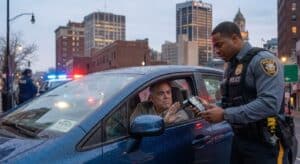 A refusal allegation can exist separately from the underlying DWI charge. The fact that an officer says a driver “refused” does not remove the need to examine what actually happened at the testing location.
Important questions may include:
These details can matter because confusion, inability to provide an adequate sample, silence, hesitation, and an express refusal may create different factual circumstances.
The refusal allegation and underlying DUI case should therefore be reviewed separately, even when they arise from the same arrest.
Add an internal link here to the dedicated New Jersey breath-test refusal page.
Breath-testing evidence can become a major part of an alcohol-related DWI case, but a test result should be examined in context.
A defense attorney may review the documentation surrounding the device and testing process, including:
The attorney may also compare the breath-test evidence with the officer’s roadside observations. If the written account, video footage, and testing documents do not tell the same story, those inconsistencies may require further investigation.
The point is not to assume that every breath result is invalid. It is to determine whether the evidence in this particular case was collected and documented in accordance with the procedures that applied.
Roadside field sobriety exercises are often conducted under imperfect conditions. A person may be standing beside moving traffic, on uneven pavement, late at night, in poor weather, or while experiencing stress after being stopped by police.
Performance may also be affected by:
For that reason, the written police description should be compared with any available video footage.
If an officer reports that a driver failed to follow instructions, the recording may show whether those instructions were clear. If the report describes poor balance, the video may reveal the condition of the ground or whether the driver actually appeared unstable.
Field sobriety evidence should therefore be assessed alongside the other evidence rather than treated as proof of impairment by itself.
Many Jersey City DWI cases depend heavily on what happened before the officer approached the driver.
Police may claim that the vehicle was stopped because of speeding, a lane violation, unsafe driving, an equipment issue, failure to obey a traffic control device, or another observed offense. In accident cases, the investigation may begin after officers arrive at the scene instead.
A DUI lawyer may review:
The legality of the stop is a fact-specific issue. The defense should avoid assuming that a stop was unlawful merely because the driver disagrees with the officer. The objective records must be compared with the police explanation.
Video evidence deserves its own review in a DUI case because it can capture details that are difficult to reconstruct later.
Body-camera footage may show the driver’s speech, movements, responses to questions, roadside instructions, field sobriety exercises, interactions between officers, and circumstances surrounding the arrest.
Dash-camera footage may provide information about the alleged driving behavior, road conditions, the duration of police observations, and the location of the stop.
Video can sometimes support the police report. In other cases, it may provide additional context or reveal inconsistencies.
For example, an officer’s written report might describe a driver as having substantial difficulty standing, while footage may show a more complicated picture. Alternatively, video may confirm observations that were only briefly described in writing.
The important point is that the attorney should review the recording itself when it is available rather than relying exclusively on another person’s summary of it.
When a DUI allegation follows a collision, the case may contain multiple layers of evidence.
Police may examine vehicle damage, witness accounts, surveillance footage, emergency communications, medical treatment, photographs, road conditions, chemical testing, and statements made by people at the scene.
An accident alone does not establish why the collision happened or whether a driver was legally intoxicated.
The attorney may need to examine two separate questions: what caused the crash and what evidence supports the allegation of impairment.
Where injuries or additional allegations are involved, the case may also extend beyond an ordinary municipal DWI matter. Each summons or complaint should therefore be identified and reviewed separately.
Jersey City’s municipal court specifically identifies driving while intoxicated among the motor-vehicle matters it handles. The court is located at 365 Summit Avenue and currently offers both in-person and virtual court sessions depending on the case notice.
The City also states that certain plea-by-mail procedures cannot be used for charges involving operating a vehicle under the influence of alcohol or drugs.
That makes it particularly important for a person facing DWI allegations to read the summons and court instructions carefully.
Local representation should never be marketed as influence over a judge, prosecutor, or court employee. The genuine value lies in preparing the case correctly, understanding the applicable New Jersey municipal-court process, reviewing the evidence, and helping the client comply with court requirements.
There is no single defense that applies to every Jersey City DUI case.
Instead, a lawyer may build the defense by testing each part of the State’s case:
The stop: Was there a lawful factual basis for the police encounter?
The observations: Do the officer’s descriptions match the recordings and surrounding circumstances?
Field sobriety testing: Were the exercises explained and conducted fairly?
Breath testing: Do the device records and testing documents support the result?
Refusal: What exactly did the driver say or do?
Video evidence: Does footage confirm or contradict important parts of the report?
Medical issues: Could injuries, medications, or health conditions explain particular observations?
Witnesses: Are independent accounts consistent with the police narrative?
Procedure: Were legally required steps followed?
A defense does not require every category to contain a problem. Even one significant evidentiary or procedural issue may deserve closer examination.
A DUI case can generate multiple records very quickly. Waiting until shortly before a court appearance can make it more difficult to understand what evidence exists and what still needs to be requested.
Omojola Law can review the circumstances surrounding a Jersey City arrest, explain the municipal-court process, examine the available evidence, and identify issues that may affect the defense.
The firm should not promise a dismissal, reduced charge, or particular court result. The goal is to evaluate the individual case carefully and provide advice based on the actual evidence and current New Jersey law.
For broader information, visit the firm’s New Jersey DUI Lawyer page.
A DUI or DWI allegation should be addressed based on evidence rather than assumptions.
If you have been charged in Jersey City, preserving court documents and seeking legal advice early can give your attorney more opportunity to examine the traffic stop, testing procedures, police recordings, and other details surrounding the arrest.
Contact Omojola Law to discuss your case with a Jersey City DUI lawyer serving Jersey City and Hudson County.
After an arrest, police may transport the driver for testing, issue motor-vehicle summonses, prepare reports, and provide information about a municipal-court appearance. Evidence may include body-camera footage, dash-camera video, field sobriety observations, breath-test records, photographs, witness accounts, and statements attributed to the driver.
The next step should be reviewing the summons and court notice and obtaining the available evidence. The attorney can then determine which factual or procedural issues deserve closer attention rather than making assumptions based solely on the charge.
Driving-while-intoxicated and other motor-vehicle cases arising in Jersey City are handled by Jersey City Municipal Court. The City currently lists the court at the Lewis S. McRae Justice Complex, 365 Summit Avenue, Jersey City, NJ 07306.
Court sessions may be held in person or virtually. The defendant should rely on the specific court notice received for the case because the required appearance method and scheduling information can vary.
A first DUI case can involve court proceedings, evidence review, breath-testing questions, field sobriety evidence, and possible driving or ignition-interlock issues.
The defense attorney should first examine why the vehicle was stopped, what the officer actually observed, whether testing procedures were followed, and whether recordings support the written police report. The outcome should not be predicted simply because the person has no previous DUI history.
Field sobriety evidence can be examined and questioned when the surrounding circumstances affect its reliability.
The attorney may review the road surface, lighting, weather, traffic conditions, footwear, injuries, physical limitations, anxiety, and the instructions given by the officer. Body-camera or dash-camera footage can be particularly useful because it allows the attorney to compare what actually occurred with the officer’s written description.
Whether a challenge is significant depends on the complete evidence in the individual case.
Breath-test evidence can be reviewed for issues involving the testing process, device documentation, operator qualifications, observation requirements, sample records, and surrounding circumstances.
The existence of a numerical result does not eliminate the need to determine how it was obtained. An attorney can compare the breath-testing documents with police reports, video footage, and other evidence. A review does not automatically mean the result will be excluded, but it helps determine whether the State’s evidence is as reliable as it appears.
A person accused of refusing a breath test may face a separate refusal allegation in addition to the underlying DWI charge.
The attorney may examine what instructions were given, whether they were understood, what the driver said or did, whether the driver attempted to provide a sample, and whether physical or equipment problems affected the process.
Because the refusal and DUI allegations can involve different legal and factual questions, each should be reviewed separately instead of assuming that one automatically proves the other.
Yes. Body-camera and dash-camera recordings may provide important information about driving behavior, the traffic stop, the officer’s instructions, field sobriety exercises, the driver’s appearance and speech, and the events leading to an arrest.
Video does not automatically favor either side. It may support the officer’s observations, contradict them, or simply provide context missing from a written report.
A defense attorney should review the recording directly whenever it is available and compare it with the police reports and other evidence.
It is sensible to seek legal advice as early as reasonably possible after receiving a DUI, DWI, or refusal summons.
Early review gives the attorney more opportunity to examine court notices, identify available recordings and records, understand the police account, and prepare for the municipal-court process.
Keep all summonses, court notices, testing documents, photographs, receipts, and other potentially relevant information. Creating a clear timeline of what happened before, during, and after the police encounter may also help the attorney understand the case.


Providing exceptional legal services

Flat Fees & Payment Plans

Let’s Discuss and Start an Effective Strategy To Protect Your Legal Rights.

Facing domestic violence allegations can affect your family, reputation, and future. Omojola Law provides focused legal representation for domestic violence matters in New Jersey.
Learn More
Whether you are seeking protection or responding to a restraining order, Omojola Law can help you understand the process and prepare for TRO and FRO proceedings.
Learn More
Child custody disputes can be difficult for everyone involved. Omojola Law helps clients address custody and parenting-time matters while protecting their parental rights and interests.
Learn More
Child support issues can involve important financial and family concerns. Omojola Law assists clients with child support matters and helps them understand their rights and obligations.
Learn More
Attorney at Law
Attorney Ade Omojola is a seasoned attorney with over 14 years in law practice. As the founder of the firm based in New Jersey, he has built a reputation with Clients for relentless dedication, exceptional legal skills, and a problem-solving approach. He is known for providing strategic advice and dedicated representation, ensuring clients’ rights are protected and their interests are secured. With a proven record of success, Attorney Omojola earned the trust of clients and the respect of peers. A true advocate who leaves no stone unturned, he made a difference over the years, with a commitment to providing personalized solutions, without ever losing sight of the lives affected by his work. When not practicing law, he is an advocate and a consistent voice for the rights of the Yoruba People, by which he worked on matters filed at the International Criminal Court, and the ECOWAS Community Court of Justice. Check our Reviews, to see what clients say about Attorney Ade Omojola over the years.

Call Now at 732.704.5021 and send us a message via fill a form



